What Factors Affect Gold Prices in India?
The price of gold in India changes every day, sometimes several times a day. Understanding what moves it can help you choose a better time to buy or sell. Here are the main factors behind those changes.
1. Global market trends
Gold is traded worldwide in US dollars, and India imports most of the gold it uses. So when the international gold price rises or falls, Indian prices follow. Global events such as wars, financial crises or major elections often push investors towards gold as a “safe haven”, which drives prices up.
2. The rupee–dollar exchange rate
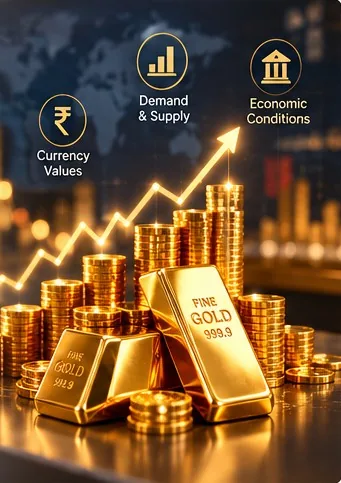
Because gold is priced in dollars, a weaker rupee makes gold more expensive in India even if the global price stays the same. When the rupee strengthens against the dollar, the Indian gold price tends to ease.
3. Demand and supply
India is one of the world's largest consumers of gold. Demand peaks during the wedding season and festivals like Akshaya Tritiya, Dhanteras and Diwali, and this higher demand can push local prices up. On the supply side, mining output and central bank buying or selling also affect the global price.
4. Economic conditions
Gold is often seen as protection against inflation. When inflation is high or the economy looks uncertain, more people buy gold, lifting its price. Interest rates matter too: when rates rise, interest-paying investments become more attractive than gold, which can cool prices.
5. Import duties and taxes
The government's import duty and GST on gold are added to the price you pay in India. Any change in these rates is reflected in local gold prices almost immediately.
What this means for you
No one can predict gold prices perfectly, but you do not need to. What matters when selling is that you are paid fairly on the day's live rate. At True Value Money Gold, our rates are linked to the live bullion market and shown to you openly before any transaction.