How Gold Purity Is Tested Before Selling Your Gold
Purity is the single biggest factor in the value of your gold. Two pieces of the same weight can be worth very different amounts depending on how much pure gold they contain. Here are the common ways purity is tested — and what to look for when you sell.
1. XRF (X-ray fluorescence) testing
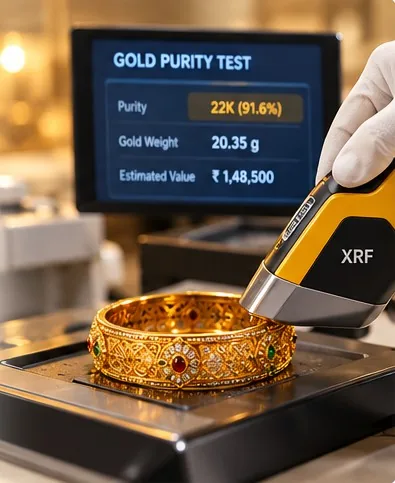
XRF is the most modern and reliable method used by professional buyers. The machine directs X-rays at your jewellery and reads the exact percentage of gold and other metals within seconds. It is completely non-destructive: there is no scratching, cutting or melting, and your gold comes back exactly as it was. You can watch the result appear on screen.
2. Touchstone testing
A traditional method where the gold is rubbed on a dark stone and the mark is compared with reference samples, sometimes with acid applied. It is quick but depends heavily on the tester's experience, and it gives an estimate rather than an exact reading.
3. Acid testing
A small scratch is made on the gold and treated with acids of different strengths to see how it reacts. It can indicate the approximate karat, but it leaves a mark on your jewellery and is less precise than XRF.
4. Fire assay
The most accurate laboratory method, where a sample is melted and chemically separated to measure the exact gold content. Because it destroys the sample, it is used mainly for bullion and refining rather than for everyday selling.
What about hallmarks?
A BIS hallmark with a HUID number shows the purity declared when the jewellery was made. It is a good guide, but older jewellery may not be hallmarked, and wear or repairs over the years can affect it. That is why a fresh test at the time of sale is always the fairest approach.
Transparent testing at True Value Money Gold
We test every item using advanced XRF and karat meter testing, right in front of you. You see the purity reading, the weight and the calculated value on screen before you decide — so you know exactly how your price was reached.