22K vs 24K Gold: What Is the Difference?
“Karat” (K) tells you how much pure gold is in a piece. Pure gold is divided into 24 parts, so 24K means all 24 parts are gold, while 22K means 22 parts are gold and 2 parts are other metals. That small difference changes the look, strength, use and value of the gold.
24K gold: the purest form
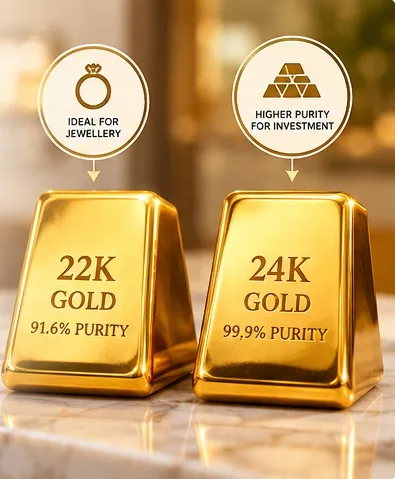
24K gold is 99.9% pure. It has a deep, rich yellow colour and is very soft — soft enough to bend or scratch easily. Because of this, it is rarely used for everyday jewellery. You will mostly find 24K in gold coins, bars and biscuits bought as an investment.
22K gold: made for jewellery
22K gold is 91.6% pure — which is why it is often marked “916”. The remaining 8.4% is usually copper, silver or zinc, which makes the metal harder and more durable. This is the most popular purity for Indian jewellery: it keeps a beautiful gold colour while being strong enough to wear every day.
Quick comparison
Purity: 24K is 99.9%; 22K is 91.6%.
Strength: 24K is soft and bends easily; 22K is harder and holds intricate designs.
Best for: 24K for coins, bars and investment; 22K for necklaces, bangles, chains and rings.
Hallmark: 24K is usually marked 999; 22K is marked 22K916.
Price: 24K costs more per gram because it contains more pure gold.
How this affects the price you get when selling
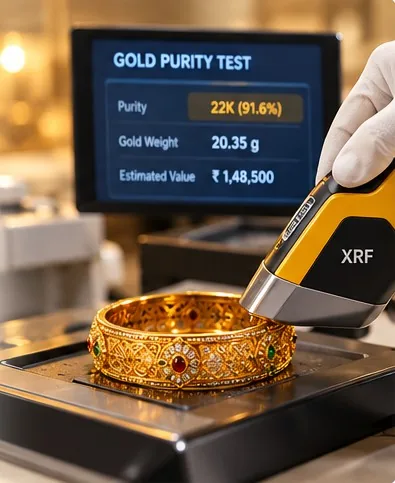
When you sell, you are paid for the pure gold content. So 10 grams of 22K jewellery contains about 9.16 grams of pure gold, while 10 grams of a 24K coin contains about 9.99 grams. That is why accurate purity testing matters so much — a wrong purity reading directly changes your payout.
Which one should you choose?
If you want jewellery to wear, 22K is the right choice. If you are buying purely as an investment, 24K coins or bars give you the highest gold content for your money. Either way, always check for the BIS hallmark and HUID number before buying.